In September, I was in a production of A Midsummer Night’s Dream at a community theater. I was also the tech director, and I made the Nick Bottom donkey head: it was a busy time.
The director’s theme for the production was “90s Whimsigoth,” an edgy, feminine style that inspired the design of the set and costumes. This theme also inspired my approach for the donkey head. Holding some experience making masks and working with fur, I knew I could easily build a classic fuzzy donkey head and leave it at that. This felt a bit too simple, though, so I decided to think about less conventional options and leave this as a plan B.
In thinking about alternative options, I kept thinking about the play Equus. If you don’t know it (you should totally read it), it features a number of horses, traditionally presented by ensemble members wearing “masks” made of metal bars or wire.
Read more: Making a Donkey Head for “Midsummer,” with an “Equus” meets “Blair Witch” Twist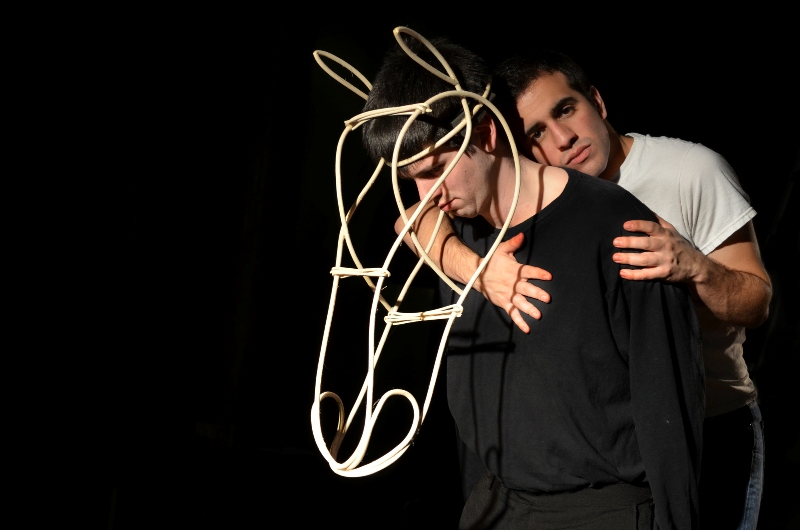
Image from Curio Theatre Company, 2013, photo by J.R. Blackwell.
I really liked this style, but wasn’t sure how to achieve this look. I didn’t have the tools on hand to shape metal, nor did I have the materials. Looking at some inspiration photos on Google, I just kept saying to myself, “it’s just… a suggestion of a horse head… out of sticks.” And then I thought, well, hey, sticks are a free and accessible resource that I can find plenty of in almost anyone’s backyard.
I ended up pulling my car off the side of the road in a wooded area and gathering a few downed branches of various sizes. Perks of living in rural western Pennsylvania: free craft supplies!
Actually making the head shape was an intimidating idea, so I decided to simplify by borrowing. I went to Wintercroft to look for a donkey or horse head. The closest they had was this unicorn, which I figured would work just fine. At this point, I am an old pro at assembling Wintercroft masks (see my post about making a ton of them for She Kills Monsters), so I won’t go through the details of assembling that mask here. It didn’t take me long before I had an approximation of an equine head to work with.
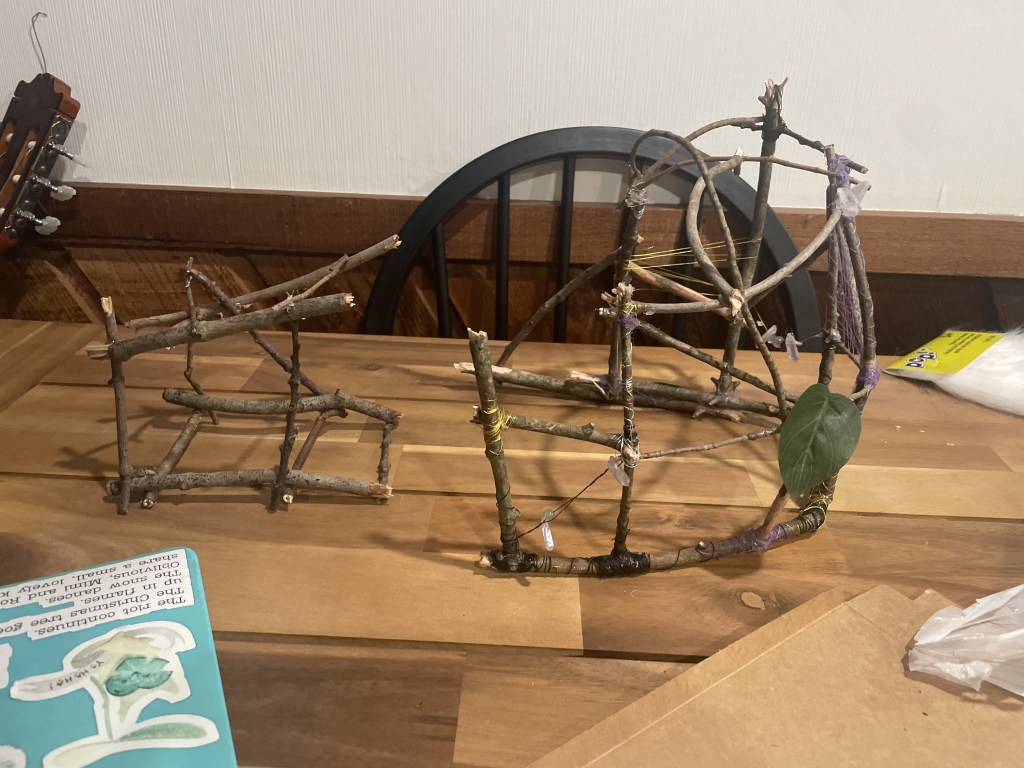
I used the Wintercroft head as a guide to figure out where to place my sticks. I selected a stick with a curve to be the lower part of the head. Using hot glue, I attached other sticks to that one, using the convex edges of the Wintercroft mask as a reference.
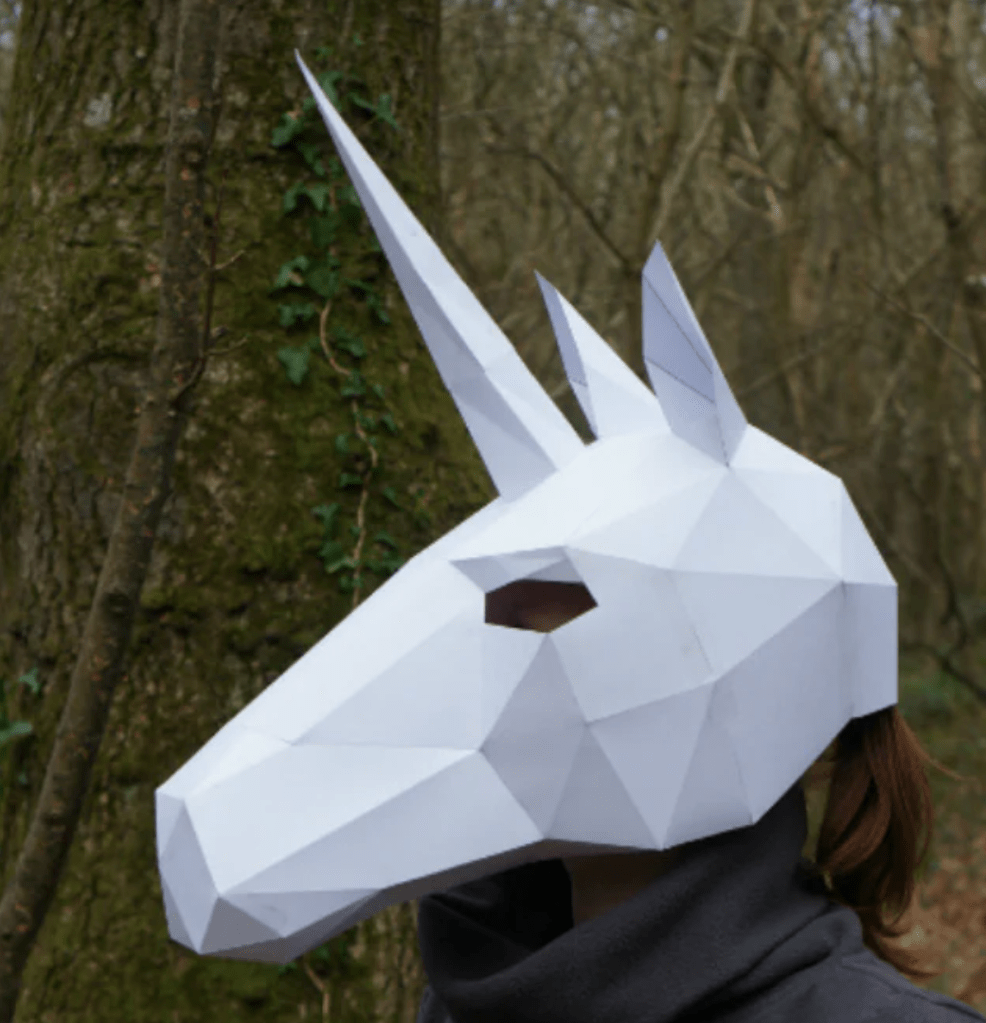

Can’t tell if my explanation is making any sense, so here’s a side-by-side comparison of the Wintercroft mask, and a photo of my in-progress stick-sculpture.
To hide the hot glue at the joints between sticks, I added some embroidery thread in a few thematic colors. This actually ended up serving a structural purpose, too: the thread helped hold the sticks in place and make the entire thing much more sturdy. Win, win!
Along with string, I also added some fake foliage and some crystal beads from the jewelry-making section of the craft store.
This was the basic process I followed for completing the head shape: I eyeballed the Wintercroft mask and selected a stick of an appropriate size and shape, or partially/fully break a stick to achieve the shape I wanted. I could also, if the stick was flexible, merely bend it into shape, which created some structural tension in the mask that also helped make it much more sturdy, depending on where the bent stick was placed.
Selecting the right stick ended up being a large part of the task, and a rewarding one: for example, if the stick had a notch at the end, you could fit that notch so it was snug up against another stick in the mask construction and glue it down there for extra solidity. Cover the joints with thread, decorate, rinse & repeat– the process was time-consuming but genuinely fun.

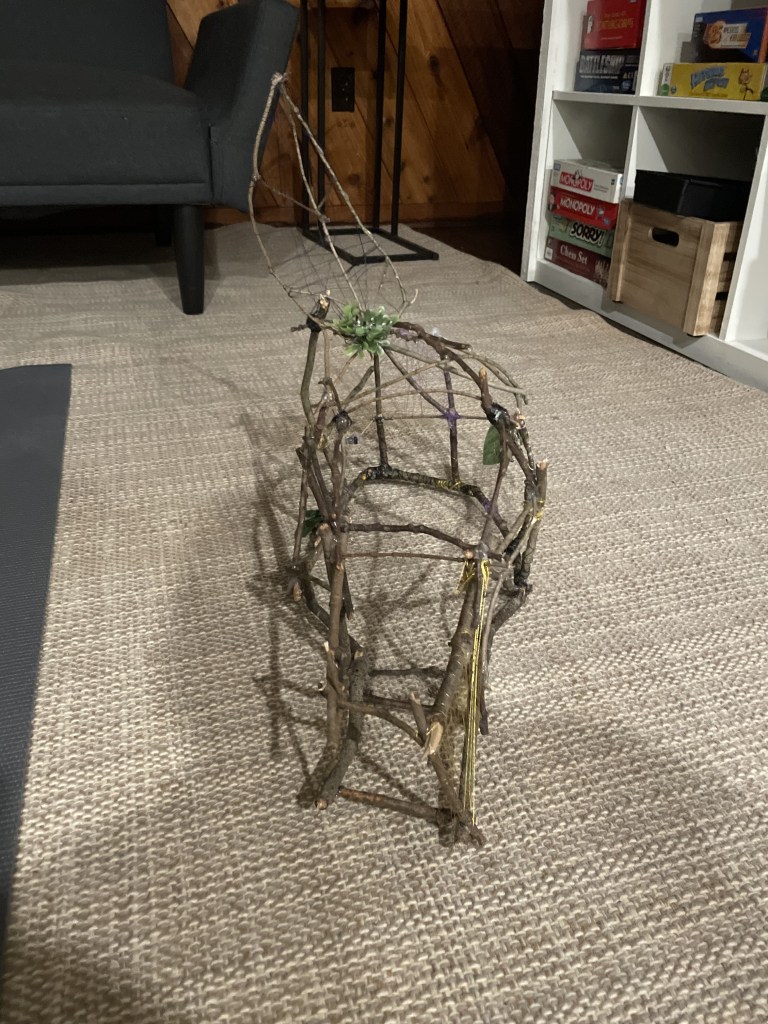
To make this a wearable costume piece, I acquired a fedora from a friend and mounted the bottom part of the donkey head to the rim of the fedora. I used more hot glue for this– there was probably a more elegant solution, but hot glue worked, too!
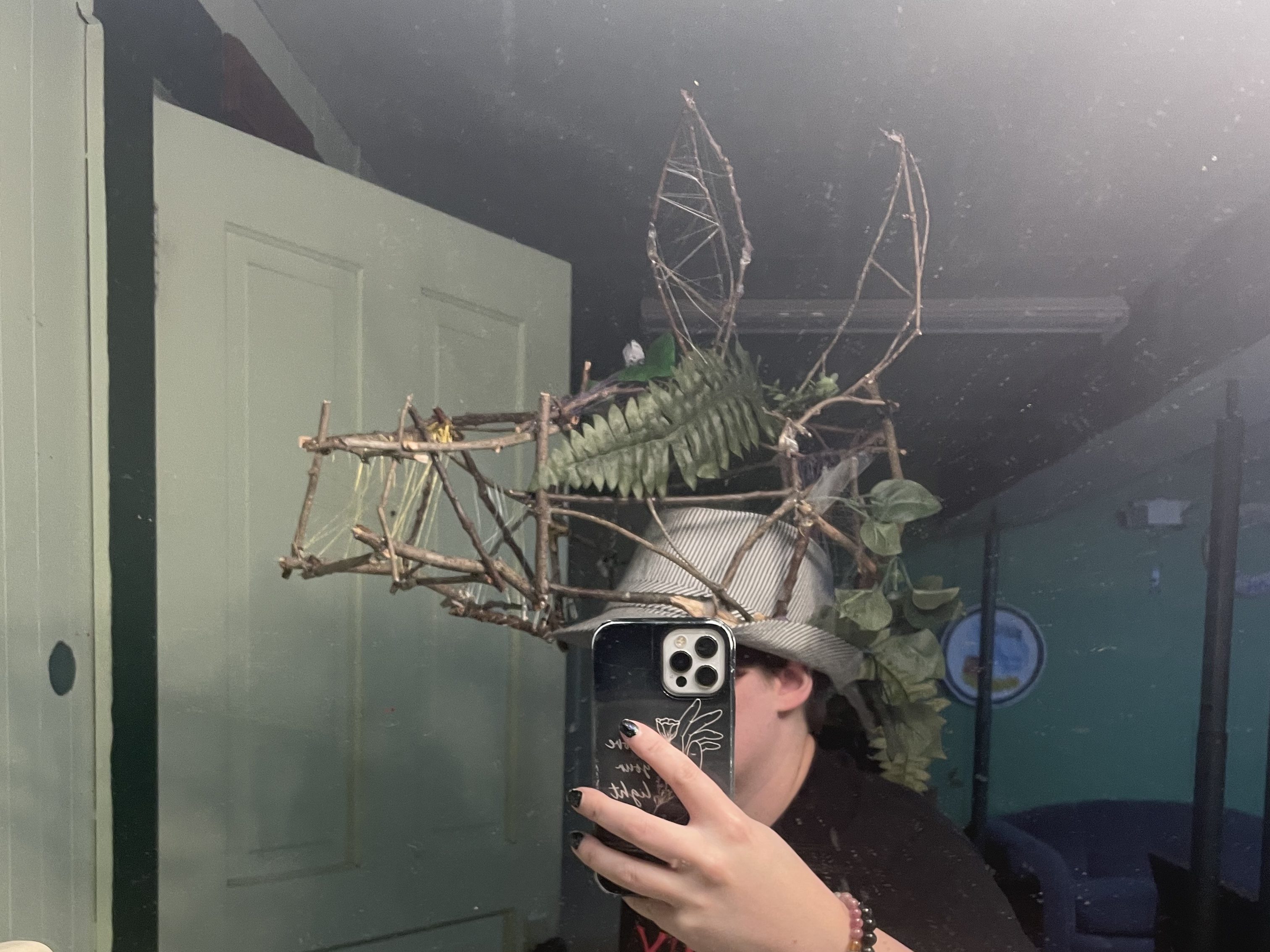
The fedora was primarily white, which could have worked, but I decided to use acrylic paint to make it black instead.
The head was a bit front-heavy, so I hot glued some miscellaneous nuts and washers into the back brim to help counterweight it. The result was honestly pretty stable, but I also added a chin strap for good measure. I hot glued this into the hat (hot glue really saved the day on this project!) after measuring using the actor’s proportions. All I had on hand was white elastic, so I went back and added some acrylic paint to darken it up.
I had planned to add a few more finishing touches– some more foliage, additional crystals, more thread– but I honestly ran out of time! The product ended up being pretty close to my initial vision, though, so I don’t regret the result.
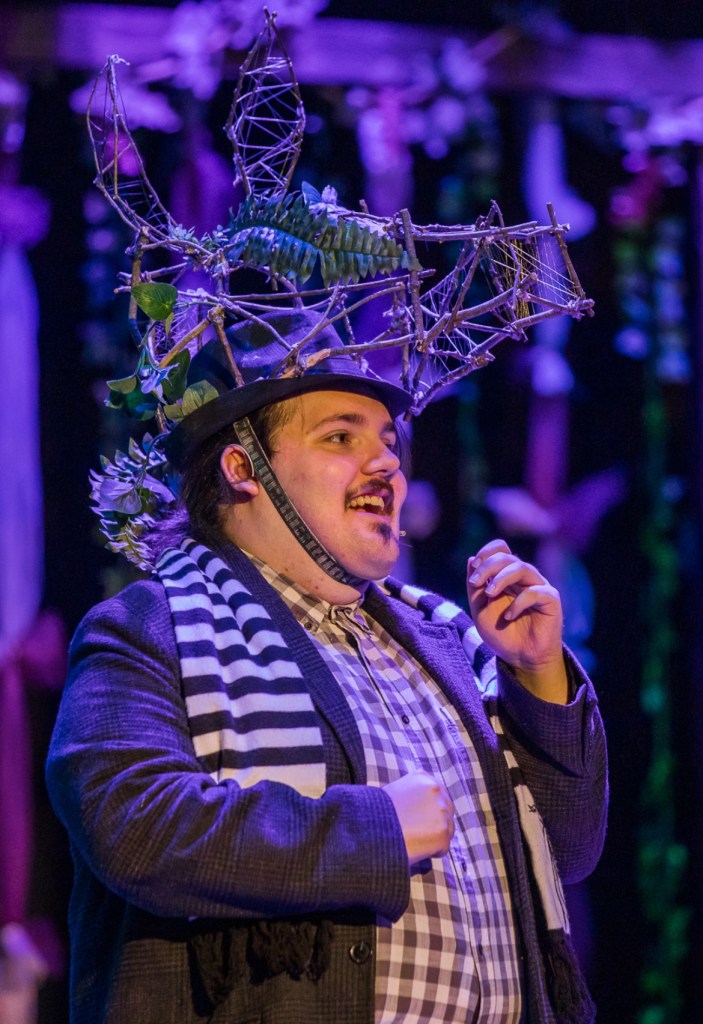
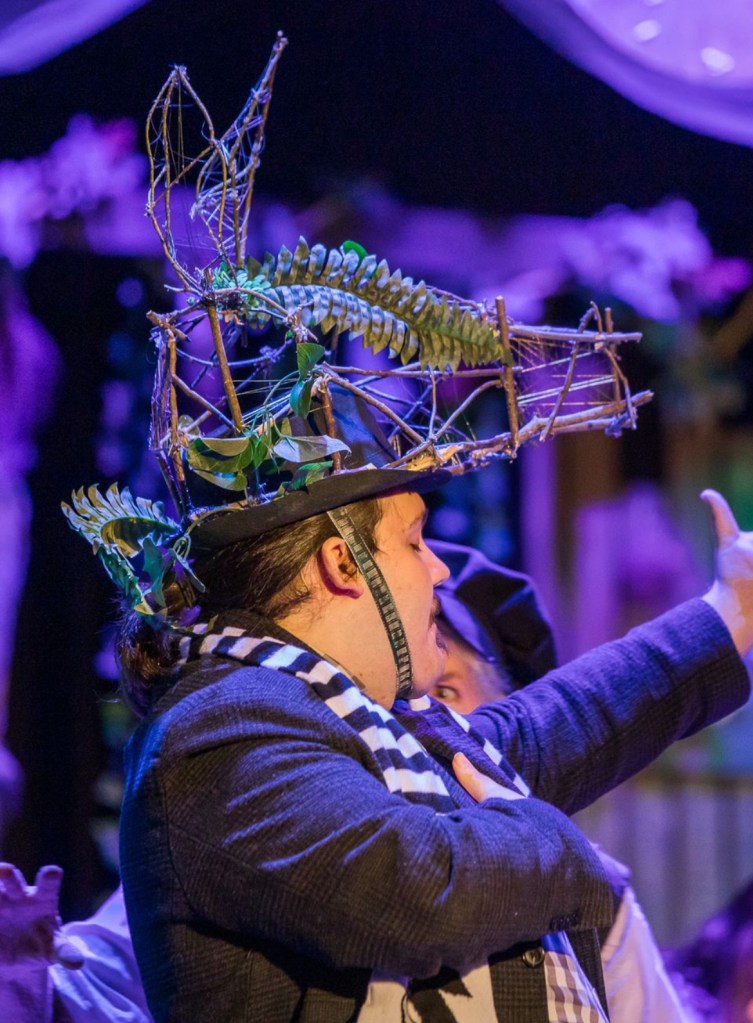
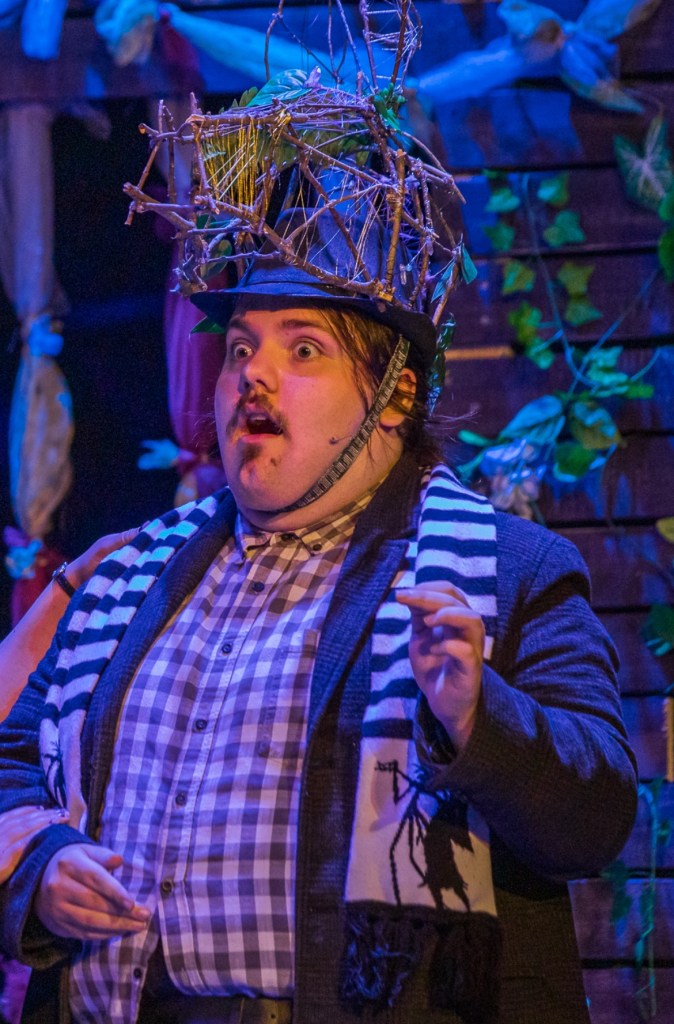
(Show photos by Kelly Tunney, KGTunney Photography.)

(A closer look at the final product.)
This was a very “trust the process” process, and for the longest time I had no idea how it was going to end up. Adding the ears was a critical moment– for a long time, I wasn’t even sure that it looked much like a donkey! Once the ears were on, it finally began looking a lot more animal and a lot less weird amalgam of wood. Adding the fake fern as a “mane” also really helped!
The result was perfect for our needs: slightly spooky, a little witchy, very woodsy, and cheap. The most expensive part were the crystal beads, but I only used a couple of them, and I planned to keep the rest for other crafts, anyway. I did have to buy a new hot glue gun, because mine broke halfway though. The thread cost maybe $6. Otherwise, this project didn’t cost anything– almost every material was reclaimed and/or borrowed without intent of returning (but with permission).
This process was actually a lot of fun, and I’m excited to try more craft projects with sticks in the future!


 Theatre Thoughts Blog