Theatre

Making a Donkey Head for “Midsummer,” with an “Equus” meets “Blair Witch” Twist

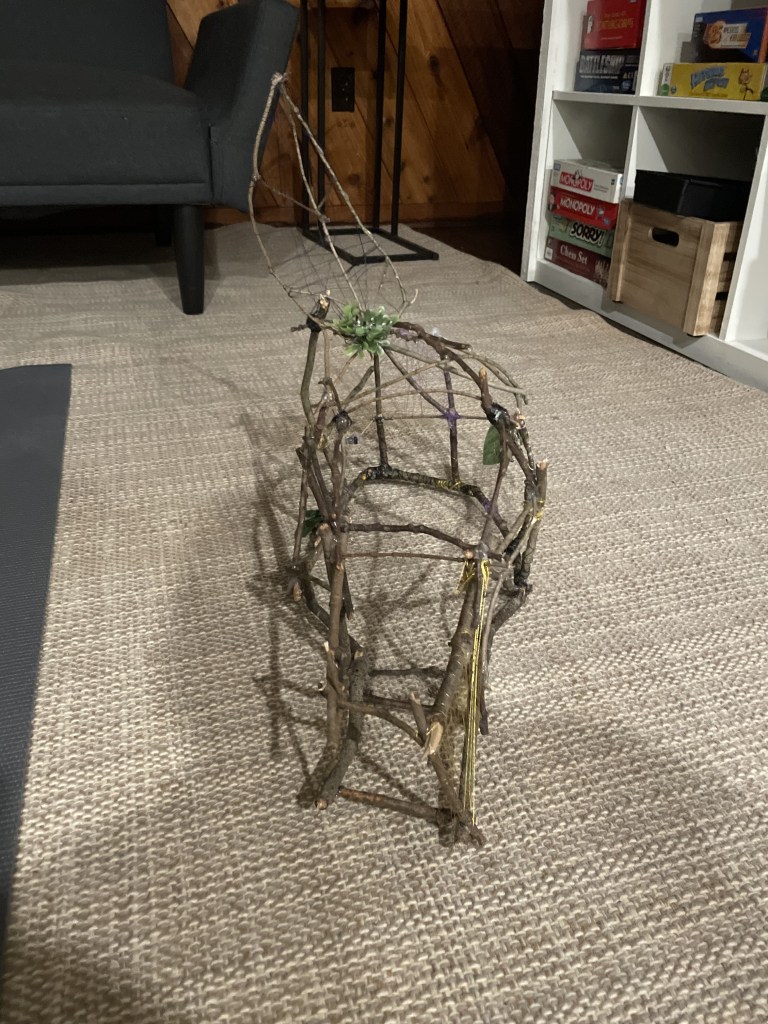
In September, I was in a production of A Midsummer Night’s Dream at a community theater. I was also the tech director, and I made the Nick Bottom donkey head: it was a busy time.

The director’s theme for the production was “90s Whimsigoth,” an edgy, feminine style that inspired the design of the set and costumes. This theme also inspired my approach for the donkey head. Holding some experience making masks and working with fur, I knew I could easily build a classic fuzzy donkey head and leave it at that. This felt a bit too simple, though, so I decided to think about less conventional options and leave this as a plan B.

In thinking about alternative options, I kept thinking about the play Equus. If you don’t know it (you should totally read it), it features a number of horses, traditionally presented by ensemble members wearing “masks” made of metal bars or wire.

Read more: Making a Donkey Head for “Midsummer,” with an “Equus” meets “Blair Witch” Twist

Image from Curio Theatre Company, 2013, photo by J.R. Blackwell.

I really liked this style, but wasn’t sure how to achieve this look. I didn’t have the tools on hand to shape metal, nor did I have the materials. Looking at some inspiration photos on Google, I just kept saying to myself, “it’s just… a suggestion of a horse head… out of sticks.” And then I thought, well, hey, sticks are a free and accessible resource that I can find plenty of in almost anyone’s backyard.

I ended up pulling my car off the side of the road in a wooded area and gathering a few downed branches of various sizes. Perks of living in rural western Pennsylvania: free craft supplies!

Actually making the head shape was an intimidating idea, so I decided to simplify by borrowing. I went to Wintercroft to look for a donkey or horse head. The closest they had was this unicorn, which I figured would work just fine. At this point, I am an old pro at assembling Wintercroft masks (see my post about making a ton of them for She Kills Monsters), so I won’t go through the details of assembling that mask here. It didn’t take me long before I had an approximation of an equine head to work with.

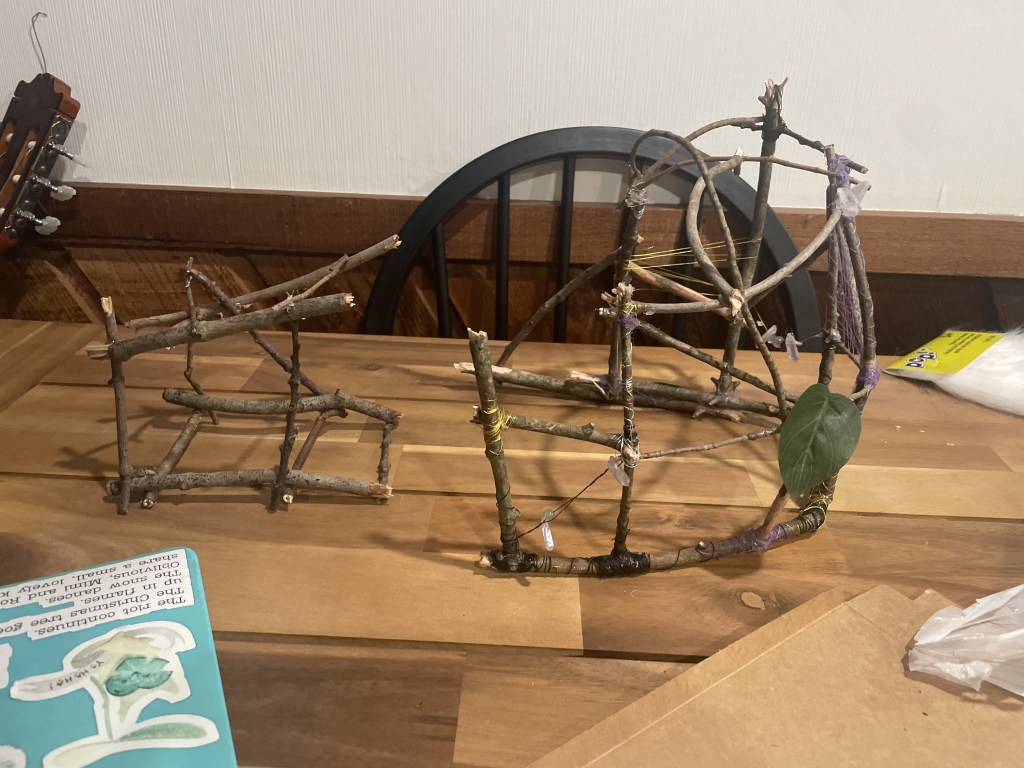
I used the Wintercroft head as a guide to figure out where to place my sticks. I selected a stick with a curve to be the lower part of the head. Using hot glue, I attached other sticks to that one, using the convex edges of the Wintercroft mask as a reference.

Can’t tell if my explanation is making any sense, so here’s a side-by-side comparison of the Wintercroft mask, and a photo of my in-progress stick-sculpture.

To hide the hot glue at the joints between sticks, I added some embroidery thread in a few thematic colors. This actually ended up serving a structural purpose, too: the thread helped hold the sticks in place and make the entire thing much more sturdy. Win, win!

Along with string, I also added some fake foliage and some crystal beads from the jewelry-making section of the craft store.

This was the basic process I followed for completing the head shape: I eyeballed the Wintercroft mask and selected a stick of an appropriate size and shape, or partially/fully break a stick to achieve the shape I wanted. I could also, if the stick was flexible, merely bend it into shape, which created some structural tension in the mask that also helped make it much more sturdy, depending on where the bent stick was placed.

Selecting the right stick ended up being a large part of the task, and a rewarding one: for example, if the stick had a notch at the end, you could fit that notch so it was snug up against another stick in the mask construction and glue it down there for extra solidity. Cover the joints with thread, decorate, rinse & repeat– the process was time-consuming but genuinely fun.

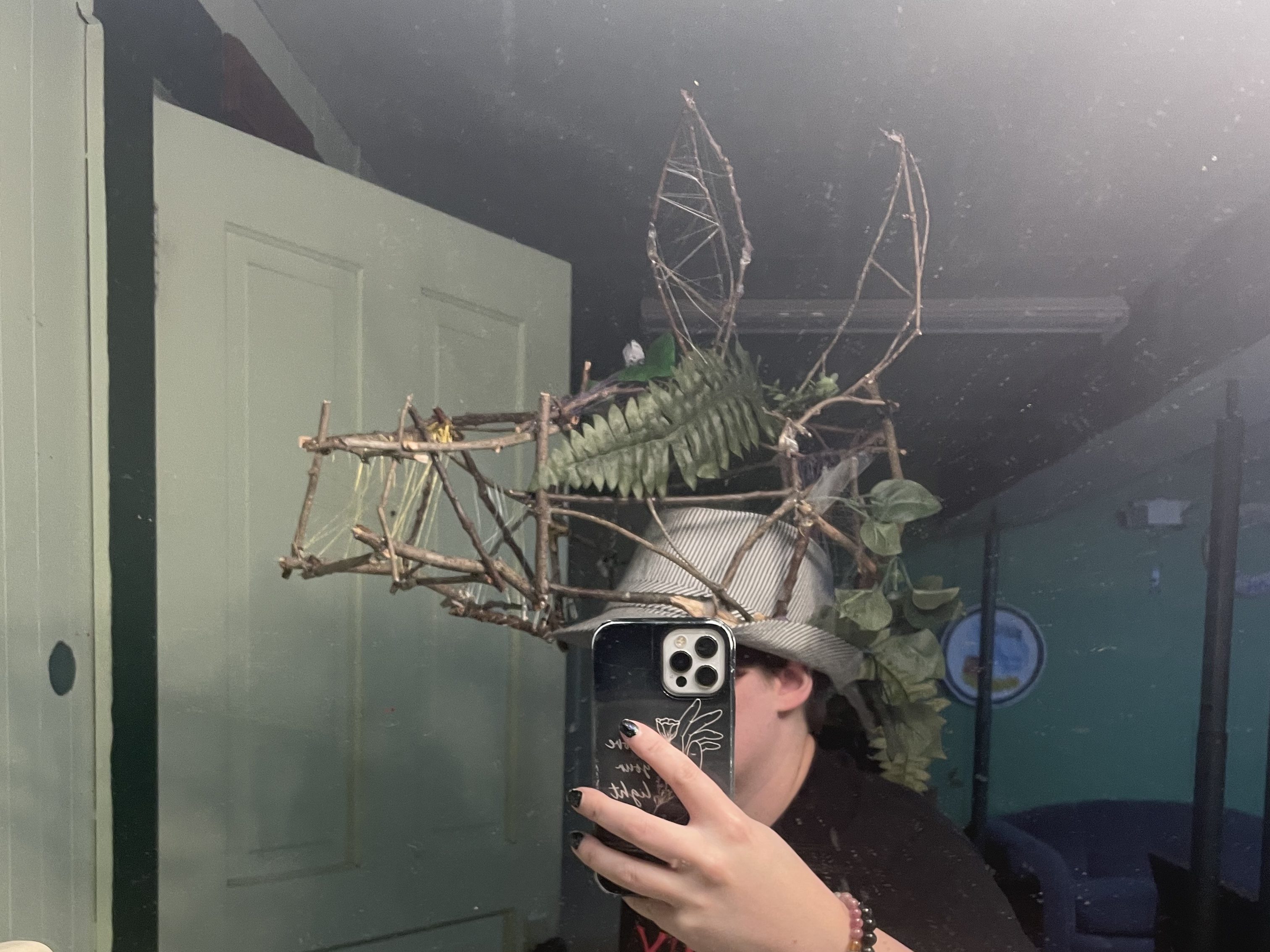
To make this a wearable costume piece, I acquired a fedora from a friend and mounted the bottom part of the donkey head to the rim of the fedora. I used more hot glue for this– there was probably a more elegant solution, but hot glue worked, too!

The fedora was primarily white, which could have worked, but I decided to use acrylic paint to make it black instead.

The head was a bit front-heavy, so I hot glued some miscellaneous nuts and washers into the back brim to help counterweight it. The result was honestly pretty stable, but I also added a chin strap for good measure. I hot glued this into the hat (hot glue really saved the day on this project!) after measuring using the actor’s proportions. All I had on hand was white elastic, so I went back and added some acrylic paint to darken it up.

I had planned to add a few more finishing touches– some more foliage, additional crystals, more thread– but I honestly ran out of time! The product ended up being pretty close to my initial vision, though, so I don’t regret the result.

(Show photos by Kelly Tunney, KGTunney Photography.)

(A closer look at the final product.)

This was a very “trust the process” process, and for the longest time I had no idea how it was going to end up. Adding the ears was a critical moment– for a long time, I wasn’t even sure that it looked much like a donkey! Once the ears were on, it finally began looking a lot more animal and a lot less weird amalgam of wood. Adding the fake fern as a “mane” also really helped!

The result was perfect for our needs: slightly spooky, a little witchy, very woodsy, and cheap. The most expensive part were the crystal beads, but I only used a couple of them, and I planned to keep the rest for other crafts, anyway. I did have to buy a new hot glue gun, because mine broke halfway though. The thread cost maybe $6. Otherwise, this project didn’t cost anything– almost every material was reclaimed and/or borrowed without intent of returning (but with permission).

This process was actually a lot of fun, and I’m excited to try more craft projects with sticks in the future!

Actor Life, Theatre

Everyone Else has Sh*t Taste, and Why That Matters as a Performer

A few years ago, I saw a production that was so bad that when it was over, I texted my friends and said, “it should be illegal for a director to misappropriate funds like this in order to put on this poor of a production.” I honestly felt upset that it was allowed to be put to stage. How many hours of rehearsal and how many thousands of dollars were spent mounting this shocking production?

A few months later, that show came up in conversation with someone I knew from that theater. They asked if I’d seen the show, and I began trying to formulate some polite comments about it to sustain a conversation. The other party then told me that they thought it was the best show they had seen all year.

I had a sort of out-of-body experience… and suddenly, something that I’ve always been told but had never quite internalized made complete sense.

Read more: Everyone Else has Sh*t Taste, and Why That Matters as a Performer

People always say, “you can’t please everyone

It’s an obvious truth. There are just too many other people on this planet to try to appeal to everyone. Tastes are complex, personal, cultural, and often based on myriad subconscious impulses we aren’t even fully aware of. Why would you bother trying to please everyone? It simply can’t be done, you’d go crazy trying.

We say things like “not everyone has to like us,” “sometimes we have to agree to disagree”– many of these sayings ultimately mean the same thing, don’t they? The idea is simple: trying to please everyone is futile. You just can’t always get other people on the same page, and you have to be okay with that.

I understand that part. An element of that conversation that I think is often missing is the fact that other people by and large are not worth impressing.

I don’t say this to be a misanthrope. Other people can be great! Other people are some of my favorite people.

As an exercise, though, think about the worst influencer you know, or your least favorite actor or author, and remember: those people have an audience. There are people who follow them, people who consider them their favorites, people who would be willing to sit and argue with you about how excellent their content and artistry are.

In one sense, this is a ringing reminder that there’s no reason to get down on yourself for feeling untalented, or unlikeable, or unmarketable. Also, it’s a reminder that a lot of people do not share your sense of taste. In fact, their taste is the exact opposite of yours.

And they’re not alone. There are a lot of people out there who will vehemently insist that the worst thing you’ve ever seen in your life is the best thing they’ve ever seen in theirs.

When you participate in the arts, inevitably, you will encounter people who simply will not like your art, and no amount of self-improvement or artistic diligence will change that. You could practice your art and master your craft until the product is, to your eye, absolutely flawless, and others would still hate it.

Instead of letting this get you down, instead of sighing and thinking “well, I can’t please everyone”– remember that some people just have sh*t taste.

In fact, maybe even most people have sh*t taste. After all, since you can’t please them all, the only person whose taste should matter to you is you.

Let them be happy with their sh*t taste. You can make your art without them.

Actor Life

Your First Audition Ever Might be Scary. But it Will be Worth It

So you’re thinking about auditioning for theatre for the first time ever.

I won’t sugarcoat it for you. Auditions are scary.

I am a seasoned performer. I have a lot of shows under my belt. Despite participating in theater for over 15 years now, I am still nervous about auditions. The process is still a great source of stress and fear for me.

So, bad news: Maybe that doesn’t completely go away. There’s a silver lining here, though, too: You don’t have to worry too much about it being scary. The good news is that we’re all scared.

It’s the truth! It’s everyone in the room. Even the people who look super confident. Especially the people who look super confident. I’ve heard it myself: I’ll be at an audition mentally ripping my hair out, and someone will walk up to tell me that I look so calm and collected… I am not!

When I say everyone, I mean everyone. Truth be told, even the show staff are nervous. They want to cast their show well. They have a lot of people to see and a lot of decisions to make. It’s scary for them, and in very similar ways that it’s scary for you. They’re also worried about embarrassing themselves or saying something stupid. They want to make a good impression just as much as you do!

So if we’re all scared, then why are we there?

It’s important to remember that question. Why are you auditioning? Really think about it.

At the end of the day, you don’t have to audition. You have free will! You’re welcome to skip the whole process. And when you’re waiting before your audition, sitting in the lobby and sweating it out, it might reassure you a little to remind yourself that you could get right up and walk out that door, if you wanted to.

But you don’t want to. You want to audition, because… you want to try something new. You want to have fun with your friends. You want to make new friends. You love the show and want to be a part of it. You want to sing or dance or act. Whatever your reason is, remember it– it’s important!

When you find that reason, auditions can even be fun.

Yes, it’ll still be nerve-wracking– but it can be fun, too! It’s just another chance to sing or dance or act. It’s another chance to hang out with your friends, or make new ones. And you might just get to be in this show and enjoy this new experience, too!

And if nothing else, remember, once you get this audition out of the way… it’ll never be your first audition again. They’re all a little less scary after that. They’re still scary… but less.

So don’t stress too much. You’re allowed to be nervous. Everyone else is, too. You’re also allowed to have fun.

And no matter what the outcome, it will be worth it.

directing, Theatre

To Favor Helping Over Punishing: The Need for Less Disciplinarian Directors

Theatre people love to talk about how neurotic actors are. I had a boyfriend once who would always say, “everyone comes to theatre because there’s something wrong with them.” I disagree with the idea… but if we’re going to point fingers at who’s really neurotic, can we talk about directors?

I’ve now been on both sides of the table. All sides of the table, really. I’ve acted, directed, taught, stage managed, all of the above. I know how taxing and just plain difficult directing is. The level of organization, thoughtfulness, and artistry required to mount a full production really is something else. I think maybe you do have to be just a little neurotic to pull it all off. And man, I’ve met some neurotic directors in my day.

Case in point: If you spend enough time around directors, you’ll probably start to pick up on a recurring sentence. The million-dollar phrase: “I’ll never cast [xyz person] again.” This statement gets wildly misused and overused.

The fact is, a lot of (not very good) directors use directing as an excuse to go on a bit of a power trip.

It’s not that I can’t imagine circumstances for a director to blacklist an actor. If an actor is a genuine safety threat to those around them, for instance, a director absolutely should blacklist that actor. The thing is, this sentence rarely follows an explanation of such a circumstance. My issue with the phrase is that it’s often used in some very judgmental and even occasionally ableist or classist ways.

Continue reading
Actor Life, Theatre

Story Time: Be Careful What You Ask a Costumer For

Directing for the first time comes with a lot of learning curves. One lesson I learned in a very vivid way when I directed my first play was that your words matter.

I was directing Qui Nguyen’s She Kills Monsters with a local community theatre group. There is a scene where one character, Miles, appears as a doppelgänger of themself– an evil, villainous corruption of the “real” character.

The first rehearsal was our read-through. My stage manager was reading all the stage directions aloud, which made the note that Miles appeared in this scene “dressed like Conan the Barbarian” stand out. If you’re unaware, Conan the Barbarian is generally presented wearing garments ranging in description from fur skirt to fur loincloth to fur… diaper… panty… thing.

We all had a good laugh over it, and I was quick to assure the actor that he wouldn’t actually have to wear a fur miniskirt; in fact, it would probably be easiest if he just stayed in his normal costume.

After the read-through, a few actors lingered to ask some questions about costume pieces they were planning to buy. (This is a theatre where costumes are generally the actor’s financial responsibility.) During this, the actor playing Miles approached me. For context, this was a 20-something guy who I had known from afar for a number of years, who had always seemed pretty quiet and even-keeled. The actor sidled up almost shyly, and said, “you know, I don’t mind wearing the Conan outfit.”

I laughed, but he doubled down, and I slowly realized he wasn’t joking.

“Oh, it definitely isn’t needed,” I said.

“But I totally will,” he said quickly, and there was something eager in his voice that made me weigh my next words carefully.

I said, “Do you… want to wear a fur loincloth for this scene?”

The actor positively lit up. I had truly been planning on keeping him in the same costume he’d worn for the rest of the show– but sure, I guess, why not? It was literally my very first day directing a play by myself, and I didn’t want to crush an actor’s hopes and dreams this early in the process.

I (and the cast as a whole) were fortunate enough to have a talented costumer in the cast. She’s a sweet older woman who is a staple– something of an icon, even– in our local theatre community. I showed her the Conan line and asked her to make a costume for the scene. We supplied her with a ratty fur coat that we thrifted that was on its last legs for the fur. This was a bit later in the process, so the number of things I had on my plate was stacking up fast.

I had told her, “something sort of… Barbarian-kilt-skirt-like. A loincloth or something.”

She said she understood, and, relieved to check another need off my massive to-do list, I almost forgot about the interaction.

A few days later, now officially into crunch time, I was working with a few actors while the rest were on a brief break. We were reviewing some physical action, and I was very focused on the task at hand when I heard a voice.

“What do you think of the Doppelgänger outfit?”

I turned and the sheer amount of flesh I was witnessing made me avert my eyes. I supplied the photos of Conan the Barbarian above, but nothing can prepare you for seeing someone you know in real life quite that exposed. Every inch of this man’s skin was out, aside for a strip around the waist and one perilously narrow flap of fabric in the front and back.

I am pretty sure I exclaimed “oh my god.”

Keeping my eyes pinned somewhere high above the head of the actor (who seemed absolutely delighted about his costume, by the way), I explained to the costumer (who also seemed equally delighted), “You know what, I am so sorry, this is exactly what I asked for… but I think it might be a little too much?”

Thankfully, I didn’t have to ask the costumer to change much. She added a few additional bits of fur, so that the effect was a bit closer to a skirt. The actor also ended up wearing a sort of cape, which provided a little bit of much-needed additional coverage.

The first time this costume was unveiled on stage during rehearsal, all of the other actors broke character, and the whole scene was done through valiant attempts to cover giggles.

The only actor who didn’t break character was the one playing Miles, of course.

Guides and Tips

20 Life Hacks for an Easier Tech Week

I’ll admit it: I enjoy tech week. I find the adrenaline rush of such a busy week absolutely thrilling.

One of the reasons I enjoy it so much is because I have learned a lot of tips and tricks over the years for making it the best experience it can be! Instead of spending the week bogged down in stress, try out these hacks:

1. Make sure you know your material before tech week starts

Tech week is not the time to be learning lines or blocking! Do all your cramming before tech week– tech week will be stressful enough without the added worry of feeling like you forgot to study for an important test.

2. Plan ahead with meal prepping

It’s a huge relief to know what you’re going to eat when you get home from the theater. This is doubly true if you’re juggling a hectic work-rehearsal balance. Make some food ahead and separate it into perfectly-sized, re-heatable portions. Depending on how busy the week is, you might need to plan both lunch and dinner. Pre-packaged frozen options that you can simply pop in the microwave are also a lifesaver.

If you don’t plan ahead, you’re more likely to wind up paying a lot of money for overpriced gas station or convenience store fare. Plan out your meals, and plan out your snacks, too!

3. Put together a “tech bag”

I like to keep a tote or duffle bag stocked with everything I need to make it through tech week. This will include any necessary items for the show, as well as anything I personally need to be healthy and prepared. I put this together before tech week begins, so I don’t have to worry about it later. Some suggestions:

  • My script/libretto
  • Necessary costume pieces
  • Bobby pins, hair ties
  • Makeup bag
  • Deodorant, hand sanitizer, wipes
  • Mouthwash and floss
  • Bandaids
  • Reusable water bottle

Depending on the needs of your production, your list will probably look quite different, but this is a good starting point.

4. Finish any important projects in advance

I’ve been the person who says “I can just finish this homework assignment during tech week.” Subsequently, I’ve also been the person who fails a class because they didn’t turn in a homework assignment that was due during tech week. (That’s a long story…)

If you have any big work or school projects coming up during tech, get them out of the way before tech week begins, or else get them as completed as possible. You really want to be able to dedicate as much time and energy as you can to tech week– I often find that tech week just demands so much of me, that trying to make time for much else rarely goes well. You never know what might come up.

5. Work on your sleep hygiene

It’s really hard to get proper sleep during tech week, I know. Try your best to get it anyway!

Sleep is very important for physical health, mental acuity, and emotional wellbeing. All of these will be taxed by the demands of tech week. Do the best you can to get enough sleep for your personal needs.

One thing I have found very helpful is to set aside a few minutes before bed to decompress. Lower the lights and read, journal, or meditate. Tech week stress can easily translate to a night of tossing and turning, so do whatever you need to sleep through the night.

6. Take care of your immune system

Getting sick during tech week sucks. ‘Nuff said.

Tech week is a great time to overcompensate for your immune system. Take your vitamins. Wear a mask when you’re around lots of people. Wash your hands regularly, and use hand sanitizer after interacting with high-touch surfaces.

Getting enough sleep and paying attention to your nutrition and hydration are also important facets of maintaining your health. These can all be challenging pursuits during tech week, but it’s for the best! Make every effort to keep up with these health needs.

7. Set aside some funds

Between gas money, snack money, and unexpected purchases of props or costuming needs, I always find tech week to be an expensive time. While planning can help mitigate this (see no. 2 on this list), it’s also helpful to plan for the worst and save some extra cash.

You never know what might arise during tech week. Spend mindfully, and prepare some emergency funds just in case.

8. Make personal hygiene as easy as possible

Obviously, maintaining your hygiene is important at baseline. The hack I offer you in this pursuit is to make taking care of hygiene needs as simple as you possibly can, so that you never find yourself “too tired” to shower or brush your teeth at the end of the day.

There are a lot of tiny barriers that can make following through on an important task just annoying enough that we lose our motivation. Your goal is to remove as many of these barriers as possible. Set out your face wash and skincare products for the morning/evening instead of putting them away in a closet or cabinet that you’ll have to dig them out of later. Make it a rule that you’ll shower before eating or getting into bed. If you find you’re wanting to spend too much time in bed in the morning to get up and wash your face or brush your teeth, take these hygiene products with you to work so you can do them a little later. Keep deodorant in your purse or in your desk at work so you can apply on the go.

And remember, a little is still better than nothing. It’s better to take quick shower and skip washing your hair than to skip showering altogether because you feel rushed. Do what you can!

9. Have a plan B for child or pet care

Having contingency plans is always helpful. If you have pets or children who need looked after while you’ll be away from the house, it’s not a bad idea to line up alternate babysitters in case of emergency. Finding emergency childcare can but a big source of stress and panic, so having some plans in place ahead of time can be a relief.

10. Consider renting a room

This one is a little niche. If you’re working at a venue that is far away from your home, booking an Airbnb or reserving a room in a hotel can save you a ton of hassle during tech week. This obviously costs a good chunk of money. If the venue is far enough away from your home or job, you may actually save by doing this instead of spending money on gas!

If it makes sense for your finances and personal sense of peace, give this a try. I’ve never done it myself, but I have friends who swear by it!

11. Time your caffeine well

I’m just going to assume that you’re going to end up drinking caffeine during this week. You’ll most likely need it.

Planning a good time to drink this caffeine can be beneficial, especially if you get acid reflux like me and have to limit your caffeine consumption as a result. If you drink your caffeine too early in the day, you might find your energy flagging by rehearsal time. If you drink it too late, it might negatively impact your sleep. If you drink it too close to show time, or too long after a meal, you might find yourself feeling jittery and anxious.

Plan your day accordingly. Caffeine consumption can absolutely make you feel a lot worse if you do it in an unwise manner. I’ve talked about my personal caffeine habits on this blog before.

12. Mind your nutrition

It’s hard to eat well when you’re in the middle of a busy tech week. Like I said before, pre-planning meals is really helpful for a variety of reasons, but it’s also helpful to think about what you’re eating and when.

I’m not going to guilt trip you about poor eating habits during an extremely chaotic time– that would be counterproductive. What I will remind you is that variety is really valuable in your diet. You don’t have to eat a salad every day, but finding time to fit in some different foods can do wonders for both your physical health and general mood. Eating the same stuff all the time gets boring! Mixing it up a little can help you eat just that much healthier.

Eat long enough before rehearsal that you won’t have issues with indigestion, but soon enough before that you won’t be hungry.

13. Keep some quality-of-life necessities at the theater

When you’re carting everything back and forth from the theatre to your home every night, it’s easy to forget something important, ESPECIALLY when you’re under the stress of tech week. For this reason, having some necessary tools and supplies that stay at the theater can help alleviate a lot of worries.

My top recommendation in this regard is to acquire a secondary phone/device charger and leave it in your dressing room. I’ve taken my bedside phone charger to the theater and forgotten it TOO many times. There are a number of other useful things to keep at the theater though, too, including show makeup and skincare products (if you can spare it/aren’t using your everyday supply), deodorant and mouthwash, and some securely wrapped snacks. If it’s an item that forgetting would prove catastrophic, keeping it (or a copy of it) at the theater saves a lot of heartache.

As long as you’ve got the space and resources (and permission, if necessary) for it, no “necessity” is too weird. I have a friend who brings a personal cooler full of Redbull to keep at the theater during tech week. Every time she brings it out, I’m always a little jealous.

14. Have some emergency-quick-fix materials on hand

Just in case of emergency, I like to bring a number of supplies that could be used to fix a costume or prop in a pinch. Generally, these include a sharpie, scissors, safety pins, body/garment tape, a mini sewing kit, a backup roll of mic tape, and a mini glue gun. These aren’t perfect solutions, but they aren’t meant to be– the idea is just to have something on hand in case, say, the zipper on your dress breaks 2 minutes before you’re supposed to enter.

Realistically, chances are, someone else at the theater will have this stuff. But why leave it up to chance? If you bring them, you’ll know exactly where they are so they can be available at a moment’s notice. Nothing’s worse than knowing someone backstage has a roll of mic tape but being completely unable to find it.

15. A tech week massage is a game-changer

A few years back, I cleaned out my wallet during tech week and found a gift card for a salon that did massage therapy. I was able to book an appointment before a dress rehearsal, and I have been dreaming about tech week massages ever since.

This is obviously an investment and wouldn’t be attainable for everyone. I haven’t had the disposable income to make it happen again ever since that first time. But if you can swing it… wow does this make you feel like a brand-new human.

16. Comfort is king

Staying as comfortable as you possibly can really helps make the long hours of tech week a lot more bearable.

I’ve taken a lot of tech-week comfort tips from actors I’ve known over the years. I know actors who bring comfy slippers and fluffy robes to wear backstage before they’ve put their costumes on. I personally like to bring a portable humidifier with me to any spaces that tend to be dry, and I’ve been known to haul my air purifier into particularly musty, dusty dressing rooms. If the space is usually too warm for you, bring in a fan!

Comfort in costume is also important. Insoles or heel liners can be a lifesaver when dealing with uncomfortable shoes.

17. Don’t be afraid to skip the cast parties

Going out after a performance is a traditional part of tech week for many. It’s been a long week, and a cast party helps blow off some steam.

But then again… it’s been a long week. Don’t let FOMO make you feel like you have to attend a post-performance outing! I’ve found saying goodbye to everyone and coming home for a relaxing, solitary bubble bath to be incredibly freeing.

If you want to party, absolutely go party! Just don’t feel pressured.

18. Candy makes everyone feel better

Something I’ve learned over the years is that tensions tend to run high during tech week. One thing that makes tensions run higher is hunger.

Picking up a variety bag of candy or chocolate bars at the dollar store and leaving it out for everyone to share boosts morale like you wouldn’t believe. It also makes you popular! Just don’t eat in costume.

19. Tidy as you go

Keeping your dressing room neat can be a challenge, but it’s absolutely worth it. If you notice that the situation is getting a little out of control in your corner of the dressing room, it pays off to do some intermittent cleaning when you have a chance. Otherwise, you’ll have to do all the cleaning at the very end of the process when you’re most exhausted. Maintain a level of organization so your future self, and your fellow dressing room partners, will thank you.

20. Don’t forget to breathe

I’ve said it several times in this article, but let me say it again: tech week is stressful! Taking time to unwind and be in the moment is important. Find space for a few calming deep breaths, even if only for a few seconds. Staying calm helps prevent issues born from panic, rushing, and lack of attention. If you feel yourself getting worked up or feeling out-of-control, you owe it to yourself and everyone around you to go take a breather.

Final Thoughts

Tech week can be whatever we make it. Don’t forget the importance of mindset, and definitely don’t forget to take care of yourself! If you play your cards right, you might find you even enjoy your next tech week.

If you’re looking for more tech week survival tips, check out my Ultimate Guide to Surviving Tech Week, or Do This, Not That: Tech Week Edition.

directing, Theatre

5 Must-Read Books for Aspiring Theatre Directors

Directing is a harsh learning curve. Thankfully, there are a wealth of fabulous resources out there to make the process a bit less harrowing. These are my top recommendations for anyone who is interested in directing for the first time and isn’t quite sure where to start. 

Read more: 5 Must-Read Books for Aspiring Theatre Directors

This article contains affiliate links. If you would like to support me, consider purchasing these books using the links provided!

Notes on Directing: 130 Lessons in Leadership from the Director’s Chair by Frank Hauser and Russell Reich

If you don’t read anything else about directing, I would highly, highly recommend you make this the one you read.

Notes on Directing is short, sweet, and chock-full of great tips about nearly every aspect of directing. It is organized in the chronological order of mounting a production, beginning with pre-production considerations and ending with the performances themselves. The tips are generally short, only a few sentences at most, but packed with wisdom. This book is an excellent starting point for building a directing method and philosophy, and its bite-sized nature invites repeated perusing.

This is a must-have for any director’s personal library. When I directed my first community theatre production, I kept my copy of this book on me basically at all times, and would spend a few minutes before each rehearsal thumbing through it for some guidance and confidence. I really can’t recommend it enough for how practical and concise it is. 

Buy local from Bookshop.org here

A Sense of Direction: Some Observations on the Art of Directing by William Ball

A Sense of Direction feels like the longer-form cousin of Notes on Directing. The general flavor of much of the advice is similar, but provided in far greater detail. This book covers all aspects of directing, from choosing and analyzing a script to how a director should behave on opening night. 

The information provided in this book is practical and backed up with professional expertise. And it’s all here in one place— while I recommend directors explore the many fabulous books on directing available to them, this one is particularly in-depth. If you only read two books on directing, this is a solid second. 

Buy local from Bookshop.org here

Backwards & Forwards: A Technical Manual for Reading Plays by David Ball 

Directing is a lot more than script analysis, but script analysis is a really important step one (that more directors should really spend more time on).

David Ball provides step-by-step instructions for reading a play carefully and methodically. The book is short and easy to read quickly (my first pass at it only took one day), but the text warrants revisiting as you begin and work through pre-production homework. Understanding your script is critical for creating your vision and guiding your actors through the work. This book is a thorough guide and a classic for its efficacy. 

Buy local from Bookshop.org here

Staging Sex: Best Practices, Tools, and Techniques for Theatrical Intimacy by Chelsea Pace with contributions by Laura Rikard

This is a detailed manual for staging theatrical intimacy. I can hear you beginning to click away: I’m not doing Heathers or Spring Awakening, I don’t need to read about how to simulate sex on stage. Take a second to mentally flip through the script of any show you’ve ever dreamed of directing: does it contain any kissing? Intimate touching? Dialogue and behavior of a sexually suggestive nature? Then you should absolutely read this book.

Chelsea Pace and Laura Rikard provide stellar guidance for handling intimacy in a healthier, safer, and less awkward way. Even well-meaning directors often find themselves asking their directors to “just kiss” or “act sexier.” Discussing sex is a taboo in our culture, so communicating with fellow creatives about it can be a challenge. This book offers helpful vocabulary and “recipes” for building intimate encounters that look natural and feel safe for everyone involved.

I honestly think that everyone involved in theatre should read this book. There is so much incredibly useful material! 

(And besides, I had to get at least one person who didn’t identify as a cis male on this list. I’ve got some more pieces by female authors in my TBR pile now, so the next list ought to be an improvement in that regard!)

Buy local from Bookshop.org here

The Empty Space: A Book about the Theatre: Deadly, Holy, Rough, Immediate by Peter Brook

This text is much more theoretical than any of the others on this list, but it is a classic for a reason. Peter Brook is one of the most celebrated directors in modern theatre history, and he shares his wisdom on the art of theatre with humor and wit. This book is short but dense, and rewards repeat reading. Despite how high-minded it can be, the theories Brook provides are palpable and intuitive, and prove useful for a director to keep in mind.

The final chapter of the book provides a miscellany of directing and acting advice. Hypothetically, if you find the first part of the book a bit too difficult to get through, just this final chapter is quite valuable— though I would highly recommend you work through all of it to build a deeper understanding of the power of theatre.

Buy local from Bookshop.org here

technical theatre, Theatre

5 Ways Working in the Scene Shop made me a Better Theatre Artist

I made extra money during college as a work-study scenic technician for the university’s theatre and dance department. The experience was a lot of fun, and it was instrumental in helping me develop into the creative thinker and problem-solver I am today.

I often say that I think every actor should try out tech and design opportunities. Why? Here are a few ways working in the scene shop helped me, and can help you, too:

Continue reading